
Back to the Basics:
'Participating in the Community'

The following is an excerpt from the fourth talk in Archbishop Chaput's "Back to the Basics" Jubilee Lecture Series. It was presented Dec. 1, 1999, at the John Paul II Center for the New Evangelization.

A key question for all of us is: What should Catholics believe about the Church? And to answer that, I'm going to spend the rest of our time this evening reflecting on the single most important document from the Second Vatican Council. It 's called Lumen Gentium, or the Dogmatic Constitution on the Church. Lumen Gentium is the Church talking about herself. That’s what ecclesiology is. Ecclesiology is a technical word meaning our theology about the Church -- in other words, what the Church is, and what role she should play in our lives.

Advent meditation
Lumen Gentium is not a casual read; it's a rich and demanding document. But it's certainly accessible to any interested Catholic, and I encourage you to at least browse through it as part of your Advent preparations. It's well worth the time you invest. And remember that the Holy Father has asked all of us to immerse ourselves in the documents of Vatican II as a way to ready our hearts for the Great Jubilee. Anyway, Lumen Gentium is Latin, and the words mean "light to the world." And that's exactly the Church’s identity. The Church should be the light of Christ to the world around us. All the other documents of Vatican II deal with some aspect of the Church. And each one of those is a product of the Holy Spirit operating in the life of the Church, so we don’t want to minimize their importance. But what's so foundational about Lumen Gentium is that it talks about the whole Church -- her entire mission and identity.

Description of Church
By the way, when it was voted on, Lumen Gentium received the nearly unanimous support of the bishops who were gathered in Council: 2,151 voted "yes" and only five voted "no." So the overwhelming majority of bishops present at Vatican II embraced it. And it describes the Church in a number of important ways:

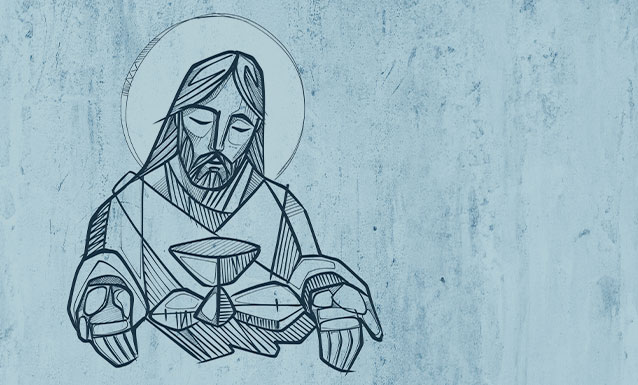
First, it speaks of the Church as being the sacrament of Christ. We talked about the definition of a sacrament back in October, so I won't repeat it here, but we should be able to look on the Church and see Christ who is not visibly present to us in other ways. Just as the Seven Sacraments are individual signs of Christ’s presence in the Church, the Church herself is a symbol of Christ's presence in the world. And just as the Church is a sacrament of Christ, Christ is a sacrament of God. We look on the face of Jesus and we see what God is like. In Jesus’ forgiveness, we see God’s forgiveness. In Jesus’ love, we see God’s love for us.

Jesus as Sacrament
Jesus is also the sacrament of humanity. We look on the face of Jesus and we see what we are supposed to be like. Jesus is the perfect child of God. And in His life and in His love, in the way He related to God and in the way He related to His sisters and brothers, we find our deepest meaning.

So again, Jesus is the sacrament of God and the sacrament of humanity. The Church is the sacrament of Jesus. So we are to be Jesus’ presence in the world today. And because of that, the Church continually carries out the three-fold ministry of Jesus.

Three-fold ministry of Jesus
Our Lord did three things when He came among us. He preached the Good News; He built up the community of faith, the community of believers; and He served those most in need, the poor. And that's who we are today. We are meant to be a reflection of Christ in the world. Preaching the Gospel, spreading the Kingdom of God, building up the community of the faithful and then reaching out to those who are most in need. And if we don’t do all three of those things, we are not the presence of Christ in the world.