
Archbishop: `what we do becomes who we are'

Talk with each other and God,
Archbishop advises families

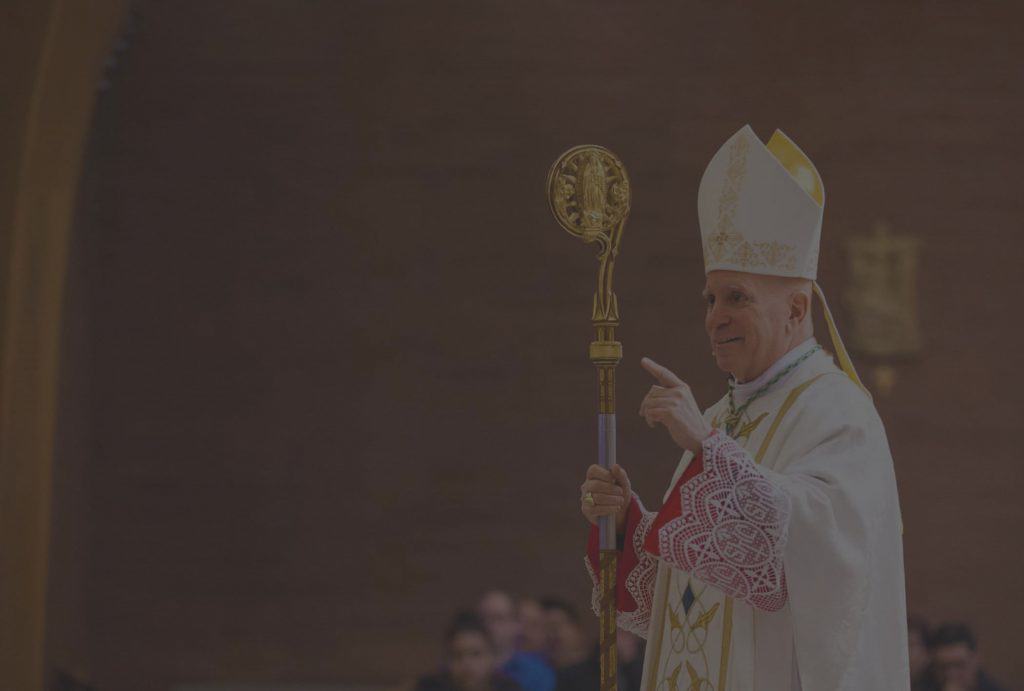
Archbishop Charles Chaput, O.F.M. Cap., delivered the following address to the U.S. Bishops' Committee on Marriage and Family Life and Committee for Pro-Life Activities symposium in Washington, D.C., Aug. 17 celebrating the 20th anniversary of Familiaris Consortio. Part II ran last week. Part III follows. To read the complete text, click here.


What can families draw from these stories in the light of their relationship with Jesus Christ?

We live in an economy that runs on the artificial creation of desires — and the goods to meet those desires. Every day, in a hundred different ways, we're told that we don't have enough things, we deserve more things, and we should get the things we want right now. The average American child sees 16,000 hours of television before the end of high school and 1 million commercials before the age of 20. In effect, our kids get a free education in greed, discontent and fantasy relationships. And then we wonder why their marriages don't work.

In the last 20 years, the average U.S. worker has seen his annual number of working hours increase by one full month. In other words, instead of creating leisure and more time for the family, the U.S. economy has brought about a permanent culture of apprehension.

We've created an environment where both parents frequently have jobs outside the home; a society of more work and more stress, caused by our addictive consumption of goods, which is fueled by the relentless marketing of products, which creates more consumer debt, which generates the need for longer work hours, in order to make more money. Families have no time to be a family. And tens of millions of husbands and wives are essentially working to service their credit-card debt. They live to pay their bills.

To counter this economic environment, one of the most important gifts parents can give their children and each other is gratitude. The German martyr and theologian Dietrich Bonhoeffer once said, " . . . in ordinary life, we hardly realize that we receive a great deal more than what we give, and it is only with gratitude that life becomes rich." The Roman poet and philosopher Seneca once wrote, "He that urges gratitude pleads the cause of both God and men, for without it we can be neither social or religious."

Gratitude leads to humility. Humility makes us aware of others. And an awareness of others and their needs softens our hearts to forgive — and leads us to see our own sins and our own need for repentance. These are the seeds of both justice and mercy, without which no society can survive.

We need to teach our children that what we do becomes who we are. We need to share more and acquire less. We need to unplug a little from the network of noise that surrounds us. We need to create the room for a silence that we can fill with conversation — conversation with each other and with God.

If our children play with toys like "Death Row Marv" or video games that involve murder and violence, they lose a sense of the sanctity of life. If they ignore the elderly people who live next door or down the street, they help create a culture of isolation and loneliness. If they think "freedom" includes the right of a website to encourage young women to starve themselves to death, they don't understand what real freedom means.

Freedom is not the right to do whatever we want. It's not "choice" for its own sake. It's not an endless variety of consumer goods. Freedom is the ability to see and the courage to choose what's right.

We live in odd times. Those of you who are my age may remember a song the Rolling Stones did about 30 years ago called Sympathy for the Devil. There's a verse in that song that kept coming back to me as I thought about our discussion today:

"Every cop's a criminal
And all the sinners saints
As heads is tails, just call me Lucifer
And I'm in need of some restraint."

These days, Lucifer is in need of a lot more than "some" restraint. We live in an age when fertility and the creation of new life can be divorced from love. It's an age when words don't mean what they mean; when the breakdown of the ties that connect us as a people is described as social progress; and when even the definition of the family can be turned upside down. The Pontifical Council for Culture described our situation this way two years ago:

"Painful personal situations call for understanding, love and solidarity, but what is a tragic breakdown of family life should never be put forward as a new model for society. Anti-family and anti-birth campaigns and policies are merely attempts to modify the very notion of `family' to the point of robbing it of its meaning. In this context, forming a community of life and love which unites spouses in association with the Creator is the best cultural contribution Christian families can offer society."

One of the biggest lies of our age is that individuals can't make a difference. It's exactly individuals who do make a difference — and united in the love of Christian families working together, they can change the world.

Let me close with one final reflection. We call the Church Ecclesia Mater for a reason. She's our mother as surely as the mother of any family. The Church continues the mission of Jesus Christ in the world. She suffers for the world, forgives, heals, encourages, corrects and guides us exactly as a mother does. So the sooner we stop calling the Church an "it" instead of a "she," the sooner we stop thinking of the Church as a religious institution, or corporation or sociology project, and begin to listen to her again as our mother, our mater et magistra, the better she — and we — will accomplish God's work of changing and sanctifying the world.

C. S. Lewis once wrote that, "There is no neutral ground in the universe; every square inch, every split second, is claimed by God and counter-claimed by Satan." John Paul II once said that, "Against the spirit of the world, the Church takes up anew — each day — [a] struggle for the soul of the world." And the great French theologian, Henri De Lubac, once wrote that, "The Gospel warns us that salt can lose its flavor. And if we — that is, most of us — live more or less in peace in the midst of the world, it is perhaps because we are lukewarm."

God doesn't need lukewarm Christians. He doesn't want lukewarm families. The mission of the Church is sanctifying the world; and all of us as her sons and daughters — especially those of us responsible for forming and nourishing families — share in her mission. "Go make disciples of all nations" is still the mandate. So let's pray honestly, work honestly, love honestly and live honestly so that others will see and believe.