
|
On Golgotha,
the blood and the dying were real. The empty tomb on Easter morning
was real. The risen body of Jesus was real. And so too, our redemption
is real. In His physical resurrection, Jesus Christ redeemed all
creation. For the Christian, the material world is good because
God made it and then redeemed it. This is why we're a religion of
statues and crucifixes, icons and paintings, bread and wine and
holy oils. God is sacramental. He uses the physical to channel His
grace and pour His Spirit into the familiar world around us, which
we see and hear and touch. Physical reality can be holy.
Now, what do
we mean by holy? "Holy" people and "holy" things are also "good"
people and "good" things -- but that's not the original Hebrew meaning
of the word. "Holy" means other than. God is holy because His ways
are not our ways; He is "other than" and greater than us. When Scripture
says that God wants a holy people, it means He wants a royal priesthood,
a people set apart. In like manner, Holy Week is the week we set
apart to commemorate the most important event in history.
The Chrism
Mass we celebrate today focuses on the blessing of the holy oils
and the chrism which we will use throughout the coming year in the
celebration of all Baptisms, Confirmations, Anointings of the Sick
and Ordinations in our diocese. We do this, at this special time
of year, to remind ourselves that all sacraments and sacramentals
draw their power from the paschal mystery of our Lord's suffering,
death and resurrection. The oils and the chrism are physical signs
of a supernatural reality -- the sacramental unity of the Church
formed by the anointing of all believers at Baptism and Confirmation,
and priests in a special way at Ordination.
These holy
oils seal us to one another in the community of faith we call the
Church. They also -- and even more importantly -- consecrate us
to Jesus Christ, who is Himself the Christos, which means the Anointed
One, sealed and consecrated to the Father. Whether we share in Christ's
priesthood through the general priesthood of the faithful, or the
ministerial priesthood of the ordained, we are branded with the
sign of His cross -- and consecrated permanently to Him -- at our
Baptism and Confirmation.
This theme
of consecration should be at the heart of every Christian's life.
Every Christian, lay or ordained, is ransomed by God at Baptism.
We owe everything we have and everything we are to the Lord. In
fact, we were literally created, in the words of the old Baltimore
Catechism, to know love and serve God in this world, and to be happy
with Him forever in the next. This is the sentiment behind the Holy
Father's episcopal motto: Totus tuus; which means, "totally yours."
I am totally yours, Lord, totally at your service.
Because of
its location in Holy Week and its special connection with the paschal
mystery, the Chrism Mass, by tradition, has a uniquely powerful
meaning for our priests, who act in persona Christi, or in the person
of Christ, at every Eucharist and in the celebration of the other
sacraments. Each year, at the Chrism Mass, we who are priests renew
our commitment to priestly service. We will do so again in just
a few moments. But before we do, I'd like to share just a few brief
thoughts on what it means -- and requires -- to be a priest as we
close out this difficult century.
Above everything
else, priesthood requires the ability to love. Love is a soft and
overused word today, and too many times it's used too lightly and
without any grasp of the sacrifices real love demands. Authentic
love is always costly, and always humbling, because it forces us
to be obedient to others, to choose what's best for others, and
to deny our pride and personal agendas.
Authentic love
is always anchored in the truth -- the truth made flesh who is Jesus
Christ; the truth which we find in the teaching of our mother, the
Church. As priests, we cannot serve Jesus Christ without loving
the people we serve and sacrificing ourselves completely for the
truth which He incarnates. We are preachers and teachers first,
and we must never cut ourselves off from the truth of what the Church
really teaches. We also need to love and support each other. It's
important for me to say this before the family of faith we all serve:
I am your bishop, but we are priests together, and I love and respect
you as my brothers in the Lord, for the lives of service you offer
to God's people.
Each of us
as priests is consecrated in an indelible, irreversible way for
service to the people of God. So at the beginning and end of every
day, we need to ask ourselves: Are we really giving everything we
have to the Lord; are we really consecrating our whole being to
the vocation of following in Christ's footsteps? Are we missionaries
to our people -- or managers?
Brothers,
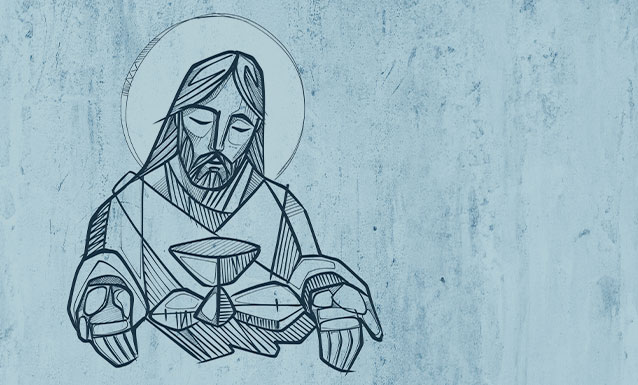
we are the living stones, the living altars of God through whom
Calvary is re-enacted; and in whose hands, God Himself is lifted
up before the people. In our hands, we hold the chalices which carry
the living blood of Christ, poured out for our people's salvation
and our own.
This is the
responsibility we bear. It is also our privilege. For you and for
me, nothing is more important than living a life conformed to that
identity, obedient to that identity, filled with joy in that identity.
Our souls, and the souls of our people, depend on our fidelity.
And the reward for that fidelity is God's love and consolation,
which is so great that it surpasses every earthly joy.
Exactly one
year ago today, I stood in this pulpit and preached my first homily
as your archbishop. I talked about the meaning of freedom. The phrase
from Luke's Gospel that day was the words of Mary's "yes" at the
Annunciation, "Let it be done to me as you say." That is the Christian
meaning of freedom: Yes, God, do what you will with me, because
you love me better than I love myself; because you know and want
my happiness more deeply than I do.
Today, again
in our Gospel reading from Luke, may God touch each of us with the
words of Jesus, the son of Mary, at the synagogue: "The Spirit of
the Lord is upon me because he has anointed me to preach the good
news to the poor."
The Spirit
of the Lord overshadowed Mary and brought forth new life and redemption
from her womb. So too may the Spirit overshadow each of us in our
priesthood, whether lay or ordained. May He anoint us anew, and
bring forth -- through our service, and the service of others --
a renewal of Christ's presence in our Church and in our world.
|