
Next week, on Jan.
22, we mark the 30th anniversary of Roe v. Wade, the Supreme
Court decision that legalized abortion on demand. It's an important
moment. The Roe decision, in many ways, has been a turning point in
our life as a nation. In the space of a few decades, an act of violence
that was condemned as a "crime against humanity" at the Nuremberg
Trials, has become a woman's "right to choose" and
even an act of convenience. We need to take a hard look at the consequences.
Political systems
are organic. They're ecologies. Even Benjamin Franklin, who was not
a particularly virtuous man, once wrote that, "Only a virtuous
people are capable of freedom." Bad laws and bad court decisions
poison the roots of the way we live. They damage the way we think
and that damage in turn creates more bad laws, more bad
court decisions, and more bad political behavior . . . and gradually
we lose the ability to see what's right, and to do what's good. We lose
the capacity to recognize and live real freedom. And that's where we
find ourselves today.
When the Supreme
Court issued Roe v. Wade in 1973, it set two distinct tragedies
in motion. First, it legalized abortion on demand. It opened the floodgates
to killing 40 million unborn children, and it wounded the lives of millions
of women and men in the process. Roe put the definition of human personhood
up for grabs. It removed the unborn from human status
and in doing so, it set a precedent that comes back to haunt us in all
our debates about infanticide, physician-assisted suicide and what some
hospitals now alarmingly call "inappropriate care" for the
seriously ill.
Second
and in a way, just as brutally Roe undermined our reasoning
and our moral vocabulary. We're losing our ability to think clearly
about moral issues. The way abortion supporters misuse the label "pro
choice" simply proves this point. "Pro choice," as an
expression, has no connection at all with the real, flesh-and-blood
event of an abortion. Abortion always involves a killing. But the language
surrounding it has become sanitized, evasive, and dishonest.
The word "community"
means more than just a social agreement to tolerate each other's appetites
and alibis. Real community always involves shared beliefs and a shared
commitment to the future. The common good always demands that
individuals sacrifice their own wants and needs for the good of others.
So if we want to renew our public life as a nation, we need to begin
by realizing that abortion, euthanasia, racial and ethnic prejudice,
greed, exploitation of the poor and all the other acts of violence against
human dignity in our day begin right here in our own selfishness
as private citizens; in our own refusal to live in a spirit of truth.
G.K. Chesterton
used to say that "tolerance" is the alibi of people who don't
believe in anything, and that the point of having an open mind is the
same as having an open mouth: Sooner or later, it's supposed to close
on something solid. Chesterton wasn't preaching the joys of bigotry.
Actually, he was doing just the opposite.
As Christians
we have the very serious obligation to show even our enemies
charity, justice, mercy, understanding and respect. But we also have
the responsibility to do all these things in a spirit of love and honesty,
which means working to serve the truth, and naming and resisting sin.
Real love is always rooted in truth. And we serve the common good best
when we serve the truth best. That's what Samuel Adams meant when he
wrote that a person "is the truest friend of the liberty of his
country who tries most to promote its virtue." And that's what
George Washington meant in his Farewell Address when he warned that,
"reason and experience both forbid us to expect that national morality
can prevail in exclusion of religious principle."
History is made
and nations are built by people who believe in something
zealously and act on it in the public square, not by people who
have a skepticism toward all belief. If we want public officials who
act with both intelligence and moral character, the only way we'll get
those qualities is by carrying our religious faith and moral principles
into the public debate not just at election time like last November,
but week in and week out, in dialogue with the people who represent
us.
Roe v. Wade
is an American tragedy. But we can still change that and I can
think of no higher priority among the issues that face us as Catholics
and as citizens.
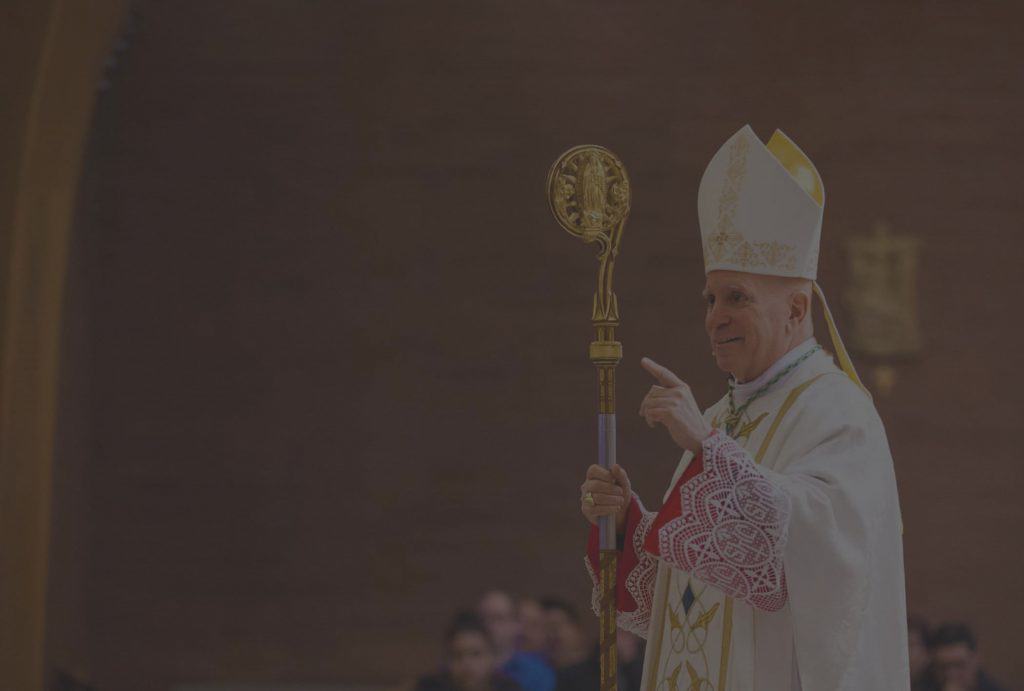
This column
was condensed and adapted from the archbishop's remarks to Colorado
Legatus members, Jan. 9.