
Niels Bohr, the great quantum scientist, once joked that, “Prediction is very difficult -- especially about the future.” And Marshall McLuhan explained why when he said that, “We drive into the future using only our rearview mirror.”
Forty years ago tomorrow, Vatican II finished its work. The council issued four documents on December 7, 1965. Two of them were the Decree on the Life and Ministry of Priests and the Pastoral Constitution on the Church in the Modern World. You already know what’s in them. And I didn’t come here today to talk about the documents. But I think we need to begin our reflections together by remembering what was in our hearts in December 1965 – at least those of us old enough to remember. Then we need to look honestly at what dwells in our hearts today.
I’ve been rereading the council this fall. And I’ve been surprised at how many different feelings I’ve had. Sometimes the words fill me with hope, confidence, energy and admiration for the vision of the men who wrote them. Sometimes they strike me as naïve. And sometimes they make me angry, because I wonder how something as true and beautiful as the vision in those documents could be so wrong about the future as it really happened. As a Church, how did we get from the crest of 1965 to the trough of 2005 in four short decades? And why did it happen to us?
I believe in the Council, and I know you do too. I know God will protect His Church, and I know you do too. But all of us have seen brothers destroyed by the scandal of the last few years. And I don’t mean just the relatively few men who did evil things. I mean all the other good priests who lost hope or became bitter because they felt abandoned or sold out or humiliated by a crisis they didn’t create.
Every priest in the United States is dealing with the fallout of the sex abuse scandal. Those of you here in Philadelphia feel especially burdened right now because of the grand jury report. I know some of you personally. I know it takes a toll. When you’re getting beaten up in the media every day, it’s hard to take the council’s talk about “joy and hope” too seriously. In fact, it can be hard to remember when “joy and hope” ever seemed like a possible future.
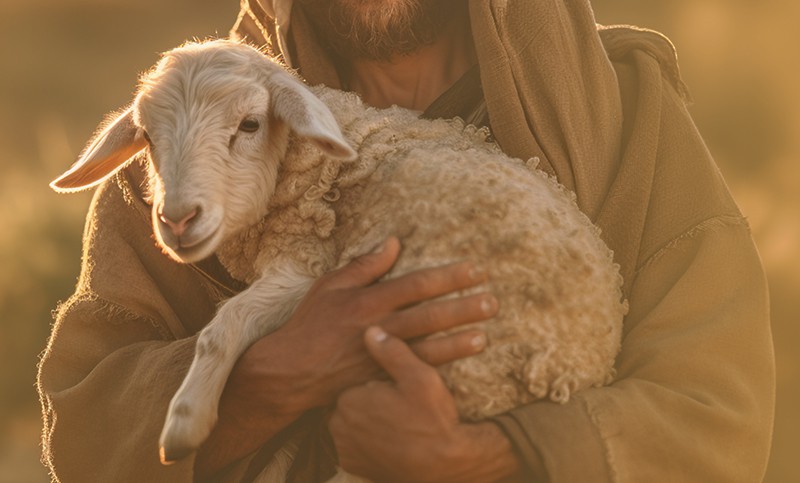
When I speak about the Church as the Body of Christ, I tell my brother priests that they’re the liver of the body. That’s right, the liver. The good news is that the liver is really important. If your liver shuts down, you won’t live 24 hours. The bad news is what the liver does. It absorbs all the poisons in the bloodstream and purifies them so the body can live. I like that image for bishops and priests. Somebody’s got to be the liver of the Church -- so why not us? Christ suffered, and His suffering redeemed the world. If we conform our lives to Christ, why wouldn’t our burdens help purify and sanctify Christ’s people?
Here’s the truth of our circumstances. We’ve committed ourselves to a God who doesn’t really care how bad we think things are. He also doesn’t care what the Philadelphia Inquirer or the Denver Post thinks of us. He already knows us better than they do -- and despite that, but also because of that, He believes in us. God cares about one thing: to save the soul of the world in the name of Jesus Christ. To do that He needs a holy people; and to lead them, He needs holy priests. And that means us. It means you.
Jesus said, “Go therefore and make disciples of all nations.” He didn’t say, “unless you’re embarrassed or feeling uncomfortable or really depressed.” We are no better nor worse than the priests who came before us, all the way back to the men who followed the first Apostles. We have the same mission of converting the world, which means shaping a holy people, which means reforming our own lives beginning right now. Priests and bishops are the spark of the life of faith within the Church. If we priests don’t change, nothing really changes.
In the midst of his ministry, Jesus once asked: "Who do people say I am?" We need to pose that same question to ourselves about ourselves. I can tell you what a lot of other people think about us. An internet search on the word "priest" last week gave me these top results:
Judas Priest, a heavy metal rock band; Maxi Priest, a reggae (Caribbean) singer; Rent-a-Priest, a service of resigned Catholic priests who offer their liturgical services; and several hundred links to stories about priests and bishops accused, indicted or going to jail for sexual misconduct.
What’s curious is that even when he’s the object of modern contempt, a priest still commands uniquely powerful attention. The word "priest" has gravity even today. Nobody cares about a rock group named Judas Layman. Similarly, in the parable of the Good Samaritan, why does Jesus use the examples of a priest and a Levite as the passers-by who do nothing to help the victim?
Remember Numbers 3:11? "The Lord said to Moses, ‘It is I who has chosen the Levites from the Israelites in place of every first-born that opens the womb among the Israelites. The Levites, therefore, are mine because every first-born is mine. They belong to me. I am the Lord.’" The reason the tribe of Levi had no land was because they professed, “our portion is the Lord.”
This parable of the Good Samaritan reminds us that we priests are sinners just like everyone else -- but with a very important twist. Our sins are more alarming because of the Christ we image. All Christians have a call to holiness, but those of us who are priests are expected not only to be icons of holiness, but – because of the sacraments -- providers of holiness. This is why the sins of priests are so uniquely disillusioning.
The path to priestly holiness is simple, but it’s also difficult and clearly expressed in Psalm 101: 2,3: "I will persevere in the way of integrity/ When will you come to me/ I will walk in the integrity of my heart, within my house."
Let me explain what I mean with an example. Cardinal François Xavier Van Thuân once said this about his 13 years in jail under Vietnam’s communist regime.
"After they arrested me in August 1975, two policemen took me by night from Saigon to Nha Trang, a 280-mile trip. So began my life as a prisoner, without timetables, without nights or days. [My] heart felt lacerated by the remoteness of my people. In the darkness of the night, in the midst of that ocean of anxiety, of nightmare, little by little I began to awaken: 'I must face reality. I am in prison. Isn't this, perhaps, the best time to do something great? How many times in my life will I have such an opportunity again? The only sure thing in life is death. Therefore, I must take advantage of the occasions that come my way each day to carry out ordinary actions in an extraordinary way .' "
He continued: "During the long nights of pressure, I convinced myself that to live the present moment is the simplest and surest way to reach sanctity. This conviction inspired a prayer: 'Jesus, I will not wait, I want to live this present moment filling it with love. The straight line is made up of millions of little points joined to one another. My life is also made up of millions of seconds and minutes joined among themselves. If I live each second [deliberately], the line will be straight. If I live each minute perfectly, life will be saintly."
Reforming our lives as priests begins with a commitment to rectitude of heart before the Lord every day of our lives. But of course, "He who wills the end must also will the means to that end." And a priest’s path to holiness always demands at least these four things:
First, we must pray. Alphonse Liguori, after years of listening to the confessions of priests, said a harsh but truthful thing: "The [priest] who does not pray will not be saved." It should be easy for us to pray. We have so many real opportunities. This is the vital importance of our daily Divine Office; the celebration of Mass every day; the spirit we bring to offering the other sacraments; and making ourselves available to God privately before the Eucharist. Who else has the Eucharist in their homes? But we all know what the obstacles to that path are: the noise and busyness that fill our lives; the excuses we make to flee from an interior life, which always results in a flight from God.
Second, we must submit ourselves to regular confession. Do doctors go to the doctor for regular check-ups? Of course they do. But precisely because we’re doctors of souls we tend to forget the health of our own. We need the grace of confession as much as any layperson, and actually more. We sin, and we need to ask Christ to release us from those sins.
Third, we must strive to be good sons and brothers. A good priest or bishop sees the Church as his mother, not a corporation or an institution. A good son listens to his mother, defends her, obeys her and respects and honors her by the holy witness of his life. A real brother supports his brother. The lack of fraternal charity among priests – the absence of real, sacrificial love for one another – is one of the biggest sources of sadness in the priesthood. A good priest disciplines himself to support his bishop as a brother and father, and he has a right to expect the same fraternal treatment in return. As a bishop, I am not “a boss.” Priests are not my subjects. Our only competition should be the fraternal competition for holiness.
Fourth, we must seek to be missionaries in our daily lives. Some years ago the Kansas City Star ran an article on pioneers. Historically, more than 80 percent of the pioneers did not make it to their destinations. Some turned back, some took side trips, most stopped along the way. As priests, we all struggle with the temptation to settle in; to become what Jesuit psychologist Father Luigi Rula called “nesters.” But nesting leads to entropy, and entropy is just another word for the slow bleeding out of our zeal for Jesus Christ and our passion for the Church. We can never allow ourselves to be like that.
The structures of modern pastoral life – whether it’s lived in the parish/or at the diocesan chancery – can very easily turn our service into meaningless routine. And that kills our priesthood. We end up serving structures rather than the larger mission we all share to convert the world. Most of us here are diocesan priests of a local Church, but we’re alwaysessentially missionaries -- not simply facilitators of good will or mini CEOs, but missionaries. We’re either winning or losing ourselves, and other people, for Jesus Christ. If we priests don’t see ourselves as missionaries, no one else ever will -- and the Church will be poorer for it. We need to return to that missionary task or we can never be the priests God intended us to be, and we’ll never overcome the temptation to be focused on and immobilized by our own failures.
Ultimately, only God can convert others. But we are His instruments and foot soldiers. And groups can’t be converted; only individuals can -- personally and one by one. But communities are converted by the conversion of the individuals within them -- and that’s how the world changes.
Whether we’re a priest or a layman, no personal conversion is possible unless we understand what we’re really like and how far we really need to go. If this is true about individuals, it’s also true about communities. So what is our world really like?
St. Paul says: "In everything you do, act without grumbling or arguing; prove yourself innocent and straightforward, children of God without reproach in the midst of a twisted and depraved generation -- among whom you shine like the stars in the sky while holding fast to the word of life." Phil 2:13
St. Peter warns us to: "Stay sober and alert. Your opponent the devil is prowling like a roaring lion looking for someone to devour. Resist him, solid in your faith, realizing that the brotherhood of believers is undergoing the same suffering throughout the world." I Pet 5: 8-9
It’s important for us -- as Vatican II reminds us -- to read the signs of the time. But it’s important that we be people of this time and not the past, whether the past is 200 years ago or 40 years ago. We live in a confused and post-modern world where nothing is the same as we thought it would be in December 1965.
In speaking about the great Arian heresy of the Fourth Century, a Church historian once wrote that, "The world woke up and found itself Arian." We’re in exactly the same kind of dilemma. We have woken up in a pagan, post-Christian – and even anti-Christian – world. Not to understand this cripples us as priests and damages the whole Church community.
In a September 2003 address to newly ordained bishops, Pope John Paul II said that, "Our times are characterized by bewilderment and uncertainty. Many -- even among Christians -- seem disoriented and without hope. In this context we pastors are called to announce the Gospel and be witnesses to hope" – even in the face of our own sufferings and failures.
What is Christian hope? Hope is not Pollyanna optimism. Hope is not pretending things will get better. Hope is an act of the will to trust in God’s intervention to save us. Without hope, we can’t possibly do what the Church requires from us. The Church needs four things from her priests:
First, t he priest is unavoidably a leader; not a facilitator or a coordinator of "dialogue," but a leader of faith.
People will follow where their priests go; not everyone, but the people who really know and love the Church. We priests need to lead first by example as Jesus did. But we also must lead by our preaching and teaching. Even in an age of the laity, priests set the tone of Catholic life. It’s the nature of the Church because it’s the nature of her Founder, in whose place we stand.
Francis de Sales once said: "Holy priest, devout people. Devout priest, honest people. Honest priest, sinful people." He stopped there. But we can imagine what kind of people we get with sinful priests. Quite apart from the sex abuse scandal, the saint’s logic forces us to ask how much of the confusion and lack of commitment within the Catholic Church today leads back to us as poor shepherds of our people.
The second thing the Church requires from us is this: W e have a duty to help our people convert -- even if they don’t want it.
Jean Marie Vianney started a campaign to close down bars and dance halls in his rural parish in Ars. Why was he perceived by his flock as a saint instead of being sent to a mental institution? Because he was ardent, unswerving and persistent in bringing his flock to Christ, no matter who criticized him. He didn’t need to be applauded by his bishop or respected by the civil authorities or even praised by his own parishioners.
He wasn’t always popular, but he also wasn’t cruel; in fact, his people knew very well that he loved them. Martin Luther King, Jr. once said when talking about transforming society, that, "The only way you can change someone is to love him, and he must know that you love them." St. John Vianney succeeded as a priest because he entirely forgot himself. He loved his parishioners more than he loved himself. He consumed himself in pastoral service and pastoral charity.
The third thing the Church asks from us is this: We need to understand the fabric of our people’s lives -- without losing our zeal to transform it, and them.
Jesus read the heart of the woman at the well. He defended the woman caught in adultery. He loved his apostles even while knowing they would abandon him. He engaged Himself personally with the people around Him, and Zacchaeus is only one example of how He did it.
There’s a famous story about the Emperor Hadrian, who spent most of his career fixing problems in the Roman provinces. One day he was in a crowd, and an old woman begged for his help, but he brushed her off because he was in a hurry and very busy. As he walked away, the woman shouted over his shoulder, “Well if you’re too busy, then stop being emperor.” Hadrian stopped, turned around, and went back to hear the woman’s petition. A true leader understands his people because he spends time with them and listens to their hopes and anxieties.
But a true leader also never excuses evil. And he never allows his people to lie to themselves. Jesus never overlooked sin. He never doubted His Father And He never doubted His mission.
I think the central issue of modern American life is the temptation to accommodate,compromise, get along, and fit in – and then feel good about it. We accept tepidness in the name of pluralism. We put diversity of belief and behavior above truth. We put the individual above the common good. We put "tolerance" above love, justice and real charity. But none of this converts anybody. On the contrary, it provides them with alibis and leeches away their faith.
It’s important for all of us who are priests to thoroughly understand the economic pressures dividing families; the power of the mass media; the appeal of consumer comfort; and the persuasiveness of science and technology. But we can’t allow ourselves to be "captured" by any of these things. If we judge all these qualities of modern life honestly in the light of the Gospel, we’ll become the doctors of our peoples’ sins, and not just their defense attorneys.
The fourth and final thing the Church requires from us is this: We need to better educate our people about what it means to be a Catholic in the post-conciliar age.
The lay vocation is not about being a lector, altar server, extraordinary minister of Holy Communion or a member of the parish council, a lay ecclesial minister – although all of these things are important and should be enthusiastically welcomed. The vocation of the Catholic laity -- the Church at its best -- is to penetrate all the various levels of society and convert the culture for Jesus Christ.
We should take a hard look at the confidence Muslims, Mormons, Jehovah’s Witnesses and evangelicals bring to the proclamation of their beliefs.
We know that we’ve been given the truth of the Gospel through no merit of our own. We need to proclaim it humbly and confidently even when other people object -- and even if they’re offended. The laity are Christ’s primary missionaries to the world, and we have to form them much more deeply for the post-modern world in which they live.
The authentic Catholic layperson in the 21st century is a person who really believes in Jesus and really believes what the Church teaches -- about sin, suffering, the Cross, the physical Resurrection, heaven, hell, the reality of the supernatural, our vocation to transform this world and care for it, the dignity of every person and a commitment to the common good through social justice and care for the poor.
On the 10th anniversary of Veritatis Splendor, John Paul II wrote that, "Beyond all the cultural changes, there are essential realities that do not change; rather they find their ultimate foundation in Christ, who is always the same, yesterday, today and forever....therefore, the fundamental reference of Christian morality is not the culture of man, but the plan of God.
He continued, “The formative secret of the Church consists, therefore, in keeping one’s gaze fixed on the crucified Christ, and in proclaiming his redeeming sacrifice. The answer [the Church] gives to the question of contemporary man’s happiness is the power and wisdom of Christ crucified, truth that sacrifices himself out of love."
As priests, we need to be men of the real future -- not of the past, and not of the future we imagined through the rear view mirror in 1965. Marcel Proust once said that, “What we call the future is the shadow our past projects in front of us.” Eric Hoffer said that, “In a time of drastic change, it’s the learner who inherits the future, while the learned find themselves beautifully equipped to deal with a world that no longer exists.” One of the great gifts we can give our people is to become future-oriented – the real future we co-create right now. We need to read the signs of this time and build the future God seeks for all of us by our choices and our actions today. We need to turn away from nostalgia about the past and to ask, “What does the Holy Spirit want from us this moment?”
Christian hope depends on a Christ-like realism about the sinfulness of the world, and the cost of redeeming it. Listen to John 1:10-11
"He was in the world,
And through him the world was made,
Yet the world did not know who he was.
To his own he came, yet his own did not accept him."
Scripture has a very deep ambivalence about the world. Listen to Gen 1:31: "God looked at everything he had made, and he found it very good -- evening came and morning followed -- the sixth day."
But then also consider Jn 15:18-19: "If you find that the world hates you, know that it has hated me before you. If you belonged to the world it would love you as its own; the reason it hates you is that you do not belong to the world. But I chose you out of the world."
The "world" in this Johannine sense is not a friend of the Gospel. And it never will be. The "world" in this sense is the enemy of the Cross, but there is no Christianity without the Cross. And every disciple will meet the Cross in his or her own personal life, which is part of what every priest has experienced over the last several years.
We need to love the world, but we also need to shed any illusions about the compatibility of the spirit of our age and the spirit of Jesus. They are enemies.
John Paul II once said: "We are engaged in a struggle for the soul of the contemporary world." If this is true, we need to recover the traditional Christian image of spiritual warfare. CCC 409 says that, "The whole of human history has been the story of dour combat with the power of evil, stretching, so our Lord tells us, from the very dawn of history until the last day. Finding himself in the midst of the battlefield man has to struggle to do what is right, and it is at great cost to himself, but aided by God’s grace, he succeeds in achieving his own inner integrity."
Our weapons are not guns or hatred or religious prejudice -- but courage, honesty, charity, clarity and truth rooted in the person of Jesus Christ, which inevitably means rooted in the Cross He carried for us.
We know that the Cross of Jesus will triumph -- but what does that mean?
Benedict XVI, when he was still Cardinal Joseph Ratzinger, tackled the question of how Christians should understand the triumph of Christ’s cross by referring to Jesus’ promise that the gates of hell will not prevail against the Church.
Benedict said that the promise should be considered in the light of Christ’s question: "When the Son of Man comes again, will he find any faith on earth?"
We don’t know the mind of God, but we do know that the victory of Christ began with his Resurrection and Ascension to God’s right hand. Our challenge to ourselves should be: "What are we doing -- you and I and our people -- to make sure that Christ finds great faith when He returns in glory.
I think two images from St. Paul can help us:
We must be runners and warriors. The runner -- as St. Paul explains -- is one who has his eyes set on the finish line, runs without stopping and prepares himself relentlessly:
"You know that while all the runners in the stadium take part in the race, the award goes to one man. Run so as to win! Athletes deny themselves all sorts of things. They do this to win a crown of leaves that withers, but we a crown that is imperishable." I Cor 9:24
The image of the warrior is even more compelling in St. Paul’s letter to the Ephesians:
"Put on the armor of God so that you may be able to stand firm against the tactics of the devil. Our battle is not against human forces but against the principalities and powers, the rulers of this world of darkness....Stand fast with the truth as the belt around your waist, justice as your breastplate and zeal to propagate the gospel of peace as your footgear....take the helmet of salvation and the sword of the spirit, the word of God." Eph 6:11-17
How can we be runners and warriors without being those embattled, depressive, negative Christians who make the Gospel so unattractive? We do it by being men of the Resurrection, confident in the victory won by Christ. We can and we should enjoy the beauty of the world that God has given us. Realism about the world does not detract from the positive embrace of the world given us in Gaudium et Spes. The joys and hopes of the world are the joys and hopes of the Church. As St. Irenaeus, said, "The glory of God is man fully alive."
Cigars, Scotch and vacations – we can enjoy all these things in very different ways depending on whether we see them as a form of refreshment or a way of life. Soldiers see such things as refreshments. If they see them as a way of life, they lose their battles, and they lose the war.
We should remember that St Augustine, who had such a deep influence on the mind of our new Holy Father, once wrote that, "Hope has two beautiful daughters. Their names are anger and courage; anger at the way things are, and courage to see that they do not remain the way they are." Are we angry enough about what's wrong with the world -- the killing of millions of unborn children through abortion; the neglect of the poor and the elderly; the mistreatment of immigrants in our midst; the abuse of science in embryonic stem cell research? Do we really have the courage of our convictions to change those things?
We need to work to change the structures of our society here and now, bringing light to the darkness of this world. Social justice concerns are part of Christ’s concerns. They’re integral to the Gospel and must be part of our personal concerns.
Cardinal Francis George once said, "The poor are our passport to God’s kingdom. The poor are not objects to be helped, but guides to be followed. The rich must walk the path of salvation in the footsteps of the poor, who will be first in the Kingdom of Heaven."
Over the years, I’ve served on a lot of committees, and right now I serve on the U.S. Commission on International Religious Freedom. My mother once asked me very bluntly: "Will any of that make any difference?" It’s a good question. The answer is, I don’t know. Nor do I need to know. We don’t really need to know the results of our efforts or the impact of our lives. But we do need to try. Because there are no minor roles or actors in the history of salvation.
Teddy Roosevelt once said that, "The credit belongs to the man who is actually in the arena, whose face is marred by dust and sweat and blood; who strives valiantly; who errs and comes short again and again, who knows the great enthusiasms, the great devotions, and spends himself in a worthy cause; who at best, knows the triumph of high achievement; and who, at the worst, if he fails, at least fails while daring greatly, so that his place shall never be with those cold and timid souls who know neither victory nor defeat."
In my life, most of the men who fit that description are men like the ones I see in this room. God called you to the priesthood because He loves you; because He made you to be leaders; because the Church and her people need you; and because the world, for all its pride and contempt, has a hole in its heart that only Jesus Christ can fill.
As Niels Bohr once said, prediction is very difficult – especially about the future. That’s because the future doesn’t exist until we co-create it with God. He made you to author with him a story of joy and hope and redemption for His people. That’s the greatness of the priesthood -- and that’s why it’s a privilege to speak with you as brothers today.